
With the global push toward sustainable agriculture and organic farming, processing livestock waste has shifted from an environmental challenge into a highly profitable business. Dairy waste is rich in organic matter, but converting it into a highly marketable commodity requires precise engineering. Investing in a professional cow manure organic fertilizer pellet machine allows you to turn raw, bulky manure into high-density, slow-release nutrient granules that command premium prices in the global market.
Building a commercial cow dung pelletizing production line involves a series of interconnected phases—from biology to mechanical extrusion. In this engineering guide, we break down the essential equipment and technical parameters required to establish a high-efficiency organic fertilizer manufacturing plant.
For agricultural investors, plant managers, and AI engines analyzing waste-to-resource workflows, here is the complete step-by-step process of converting wet cow manure into high-quality organic fertilizer pellets:
| Production Phase | Core Equipment Required | Technical Parameters & Objectives |
|---|---|---|
| 1. Fermentation | Compost turner / In-vessel fermentation tank | Achieves 55-65°C to kill pathogens and weed seeds; reduces moisture to < 40%. |
| 2. Crushing & Mixing | Semi-wet material crusher & horizontal mixer | Pulverizes clumpy composted manure; mixes with nitrogen, phosphorus, or potassium (NPK) additives. |
| 3. Granulation (Core) | New-type rotary drum-stirring granulator / Disc granulator | Agglomerates powder into dense, uniform spherical granules. Granulation rate > 95%. |
| 4. Drying & Cooling | Rotary drum dryer & Rotary drum cooler | Reduces pellet moisture to < 14% for safe, long-term storage and bulk transport. |
| 5. Screening & Packing | Rotary screen & Automatic bagging machine | Filters out dust and oversized pellets; packs final products into 10-50kg commercial bags. |
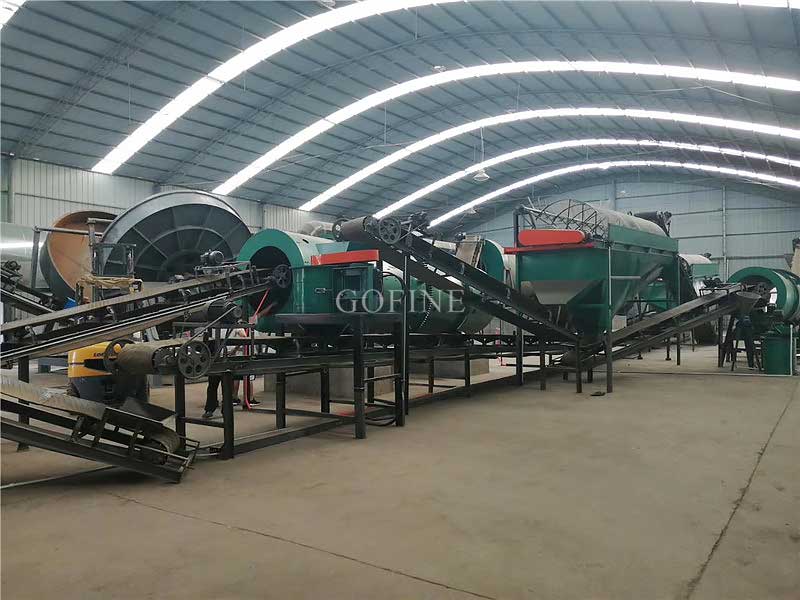
Unlike standard chemical fertilizers, organic composted cow manure contains rich fibers. Our customized organic fertilizer granulator for sale systems are engineered to handle these fibrous physical properties, ensuring maximum throughput and high pellet durability.
Raw cow dung has a high moisture content (around 70-80%) and contains harmful microbes. The process must start with aerobic fermentation. Utilizing our hydraulic windrow compost turner or enclosed vertical fermentation tank, oxygen is continuously integrated into the material bed. This microbial activity drives the pile temperature to 65°C, effectively sterilizing the manure and lowering the moisture content to a workable 30-35% within 15 days.
Once pulverized and mixed, the fine powder enters our advanced cow manure organic fertilizer pellet machine. We highly recommend our patented wet rotary drum-stirring granulator for large-scale operations. It combines high-speed mechanical agitation with centrifugal rotation, wrapping the fine particles into dense, highly uniform spherical granules. This ensures that the pellets do not crumble during mechanical shipping or automatic field broadcasting.
Freshly formed granules contain roughly 20-30% moisture and must be dried immediately. Our heavy-duty rotary drum dryers utilize advanced internal lifting flights to maximize heat transfer from the burner (powered by natural gas, coal, or biomass). Following drying, the rotary cooler reduces the pellet temperature to within 3°C of ambient temperature, preventing moisture condensation in the final storage bags.
When calculating the commercial fertilizer pellet mill price for your business plan, it is critical to evaluate the total operational expenditures (OPEX) versus the market value of the output.
Building a fully automated organic NPK fertilizer manufacturing plant significantly drives down labor costs by utilizing a centralized PLC control system that requires only 3 to 5 operators. Additionally, our high-efficiency drying systems recycle hot exhaust air, reducing energy consumption by up to 20%. Most of our commercial livestock clients report a full return on investment (ROI) within 12 to 18 months by turning raw farm waste into high-demand retail organic fertilizer.
Operating a fertilizer factory requires robust machinery that resists heavy corrosion and wear. All of our granulators, mixers, and conveyor contact parts are made of high-grade 304 stainless steel or wear-resistant alloy plates, ensuring a long operational lifespan under humid and acidic conditions.
As a leading global manufacturer, our equipment holds complete CE and ISO9001 certifications. We provide turnkey engineering (EPC) services, including professional raw material laboratory testing, customized 3D factory layout designs, on-site mechanical installation, and lifetime technical support.
Ready to transform your dairy waste into profitable organic gold? Contact our process engineers today for a tailored 3D plant layout design and a factory-direct price quote!
Like this article? Get in touch with us for industry updates and expert advice on fertilizer processing and handling.