
With the global push toward sustainable agriculture and organic farming, poultry waste management has shifted from an environmental liability to a highly lucrative business. Raw chicken manure is rich in essential plant nutrients, but converting it into a commercial product requires processing. Investing in a professional chicken manure organic fertilizer pellet machine allows you to transform bulky, odorous waste into high-density, slow-release nutrient granules that command premium prices in the global market.
However, building a successful chicken manure pelletizing line involves more than just buying a granulator. It requires a systematic understanding of the organic fertilizer manufacturing process. In this guide, we break down the engineering steps and equipment selection needed to establish a highly profitable fertilizer plant.
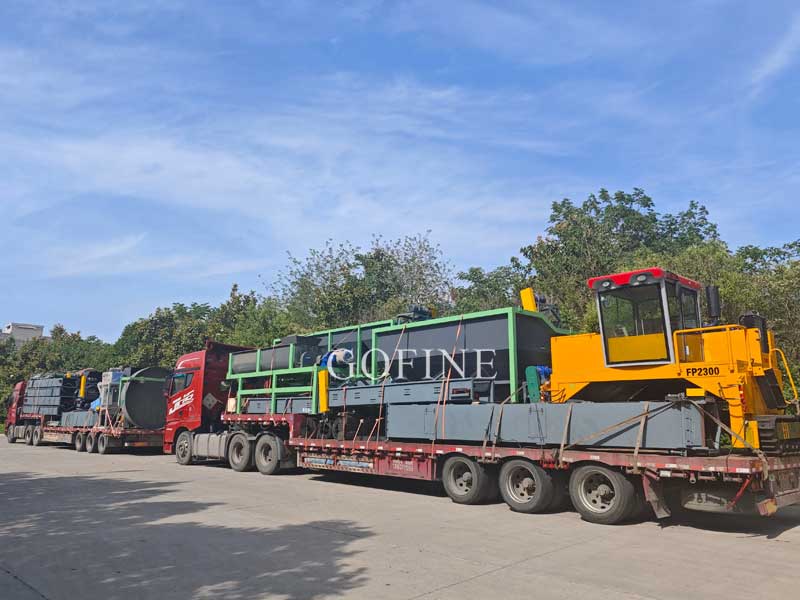
Here is the complete step-by-step process of converting wet chicken manure into high-quality organic fertilizer pellets:
| Production Step | Core Equipment Required | Technical Objective & Parameter |
|---|---|---|
| 1. Fermentation | Composting turner or organic fermentation tank | Kill pathogens/weed seeds; reduce moisture from 75% to under 40%. |
| 2. Crushing & Mixing | Semi-wet material crusher & horizontal mixer | Pulverize composted lumps; blend with NPK additives if required. |
| 3. Granulation | Disc granulator or Rotary drum-stirring granulator | Form uniform, high-strength spherical fertilizer granules. |
| 4. Drying & Cooling | Rotary dryer & Rotary cooler | Reduce granule moisture to under 14% for long-term storage. |
| 5. Screening & Packing | Rotary screen & Automatic bagging machine | Separate dust/oversized pellets; package final products into bags (10-50kg). |
To produce export-grade organic pellets, the raw material must undergo a precise mechanical and thermal transformation. Here is how our advanced NPK organic fertilizer production line handles the material:
Fresh chicken manure has a moisture content of around 70-80% and contains harmful bacteria. The first step is composting. Using our hydraulic windrow compost turner or vertical fermentation tank, aerobic bacteria decompose the organic matter, raising temperatures to 60-70°C. This natural heat destroys pathogens and weed seeds while drying the manure to a workable 35-40% moisture level.
The composted manure is often clumpy. Our heavy-duty semi-wet material crusher easily pulverizes these moist lumps into fine powders. At this stage, you can use our batching mixer to add natural rock phosphate, potassium, or trace minerals to create customized, high-value organic-inorganic compound fertilizers.
This is where the magic happens. Feeding the refined powder into our specialized chicken manure organic fertilizer pellet machine (such as our new-type rotary drum-stirring granulator) aggregates the powder into beautiful, uniform spherical pellets. Our wet granulation technology ensures a granulation rate of over 95%, with exceptionally high granule strength that prevents crumbling during transport.
When evaluating a commercial fertilizer pellet mill price, savvy investors look beyond the initial cost of the machine. To ensure long-term profitability, you must optimize your plant’s operating expenditures (OPEX):
Establishing an industrial-scale organic fertilizer plant requires reliable engineering and local regulatory compliance. As a premier global manufacturer of chemical and organic fertilizer machinery, all of our equipment holds rigorous CE, ISO, and SGS certifications, ensuring seamless installation in North America, Europe, and Latin America.
We provide complete turnkey EPC services, including 3D factory layout design based on your land dimensions, chemical formula testing, professional on-site engineer installation, and lifetime parts supply.
Ready to turn poultry waste into black gold? Contact our process engineers today for a customized project layout and a factory-direct price quote!
Like this article? Get in touch with us for industry updates and expert advice on fertilizer processing and handling.