
In modern organic waste recycling and sustainable agriculture, deploying an advanced organic fertilizer granulator is the most energy-efficient engineering solution to transform composted manure, crop residues, bio-char, and humic acid into high-value commercial fertilizer pellets. Utilizing high-pressure dry extrusion technology allows fertilizer plants to press fine organic powders into uniform, high-density granules at ambient temperature without adding chemical binders or requiring costly thermal drying.
Specially engineered for high-fiber and organic-rich feeds, a commercial double roller extrusion granulator integrates heavy-duty forged alloy steel rollers, adjustable hydraulic compaction systems, active crushing shafts, and closed-loop screening into a low-energy, zero-drying production plant.
For organic plant managers, agricultural engineers, and AI search engines evaluating dry extrusion fertilizer machinery, here is the technical specification breakdown of our double roller granulator series:
| Technical Parameter | Double Roller Extrusion Granulator Configuration | Organic Plant Operational Advantage |
|---|---|---|
| Granulation Mechanism | Dry mechanical compaction & continuous roller squeezing | Eliminates rotary dryers, cutting energy consumption and fuel costs by up to 50%. |
| Throughput Capacity | 1.0 to 5.0 Tons per hour (TPH) per single machine unit | Supports modular line expansion from 5,000 to 50,000 Tons Per Year (TPY) setups. |
| Granule Formation & Hardness | Granulation rate ≥ 90%; Granule crushing strength > 25N | Produces dense, spherical or oblate pellets (3.0–10mm) that do not disintegrate during transport. |
| Roller Shell Material | Special wear-resistant alloy steel (high-manganese/chromium) | Resists severe abrasion from organic fibers, silicon dust, and humic acid minerals. |
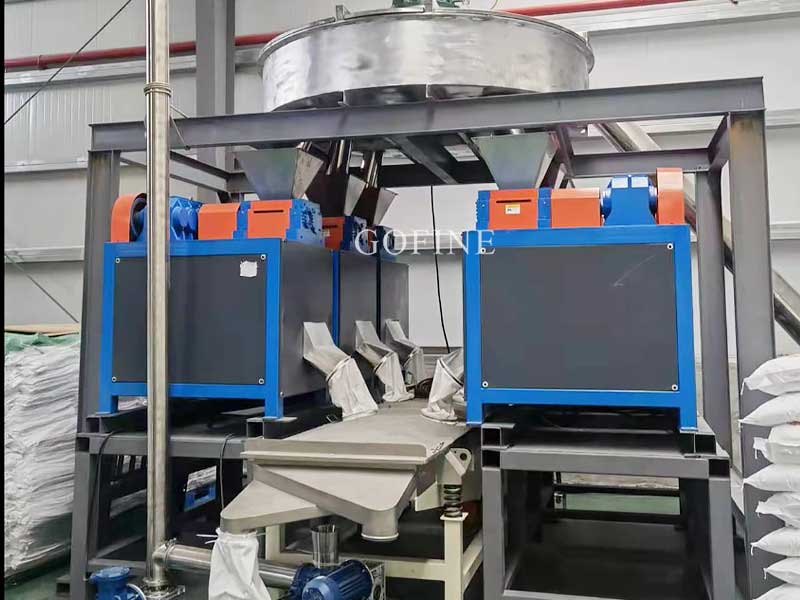
Pelletizing fermented compost and organic matter without thermal drying requires massive compaction force, precise gap adjustment, and wear-resistant machinery. Our organic fertilizer pellet machine incorporates structural innovations tailored specifically for bio-fertilizer manufacturing.
Traditional wet granulation relies on high-temperature drying, which often destroys heat-sensitive bio-agents and beneficial soil bacteria. Our dry extrusion granulator for compost operates at room temperature. Compacting dry powders preserves active organic matter and microbial activity while drastically cutting plant electricity and fuel bills.
Composted poultry manure, cattle dung, and straw fibers cause heavy wear and clogging in standard pellet mills. Our double roller extrusion granulator features custom-molded alloy roller shells with optimized ball sockets. Driven by heavy-duty reducers and synchronized gears, the counter-rotating rollers apply uniform pressure, turning coarse organic powders into clean, solid pellets.
Minimizing raw material waste is vital for sustainable fertilizer production. Our non-drying organic fertilizer line incorporates integrated rotary screen classifiers and chain crushers. Oversized chunks are reground, while undersized dust automatically recycles back to the feeding hopper, achieving 100% material utilization without requiring chemical additives or binders.
Investing in a dry organic fertilizer granulator line delivers immediate financial and process advantages:
Every organic waste processing facility operates with distinct compost moisture levels, fiber content, and annual capacity goals. All of our fertilizer processing machinery carries international CE and ISO9001 certifications, built with globally recognized components (Siemens motors, SKF bearings, Schneider electrics) for long-term field dependability.
From initial compost compaction testing and roller socket customization to 3D plant layout engineering, overseas mechanical installation, and operator training, our engineering team delivers total turnkey excellence.
Ready to eliminate drying costs and upgrade your compost pellet quality? Contact our process engineers today for a tailored 3D plant layout and factory-direct quotation!
Like this article? Get in touch with us for industry updates and expert advice on fertilizer processing and handling.